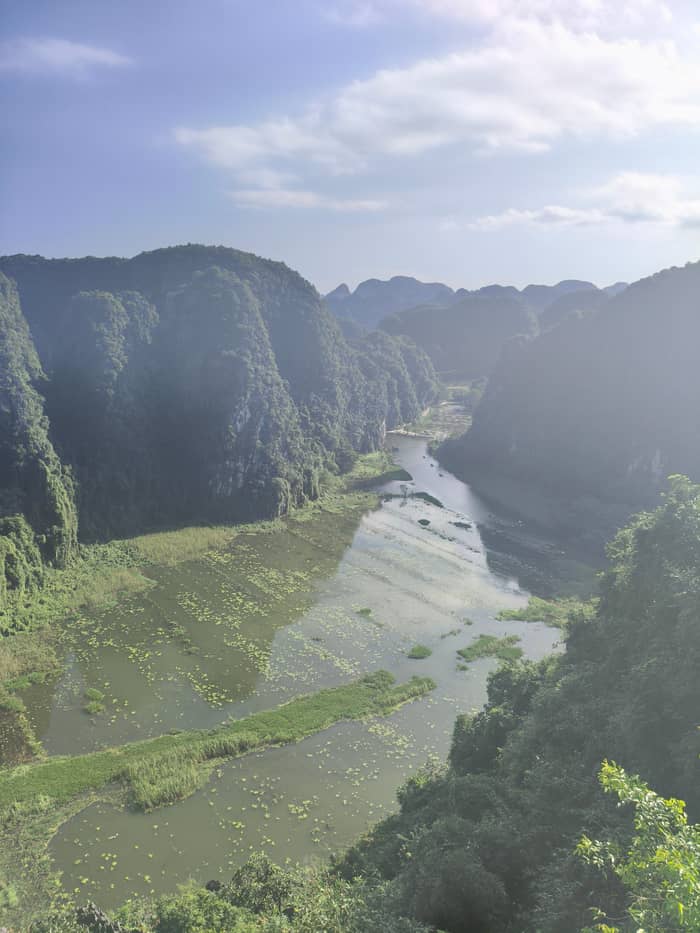
Booked here
The day on this site
Boat, Hoa Lu and Mua Cave
- Boat stop1.5 hours
- BikeOptional, 40 minutes
- Reviews3,942
Guides
Language
Currency
See what is open$46 and up · cancel at no chargePick-for-me guide
A single crop a year sets the calendar at Tam Coc. This guide follows the paddies and the weather season by season, so you can choose a week for the boat ride and know what the river looks like.
Editorial team, tamcoctour.quest · Updated November 16, 2026 · 9 mins to read
Key facts
Rice grows differently at Tam Coc than in other places in Vietnam. The national news agency says Tam Coc only has 1 rice crop per year, because the river level rises in the monsoon and farming on its banks becomes impossible.1 That single crop makes the Tam Coc rice fields tour simple to plan, as there is only a single stretch of the year when the paddies are at full height and a single stretch when they are gold.
The colors change in a regular order along the Ngo Dong River. The national radio paints spring as a time of bright green banks, followed by a turn to silky yellow in the fourth month of the lunar calendar, and summer as the season when lotus perfume drifts over the river.8 The provincial tourism center describes the river banks changing with the rice season, from green rice to golden rice to the silver of water standing in the field.4
That order is the thread of this page, and it is worth keeping in mind through the rest of it. Green comes first, gold follows in the ripening weeks, and the provincial center lists the silver of water in the field as a third look. The boat ride is the same ride in every season; what changes is the surface of the land that the oars pass between. If you can only come once, pick the look you want to see and set the date around it.
Season by season
Weather periods are the national authority's description for Hanoi, the nearest city it covers; the official pages do not describe the Tam Coc fields from December to March.18
The golden stage has a short window, and sources place it close together. The news agency gives the ripening rice season as late May to early June, with yellow-green rice extending from the rocky mountains to the river banks.2 The national tourism authority gives the same dates for the golden terraces. Its page on Ninh Binh sets the best time at April to June, and has the paddies around Tam Coc turning gold in the last weeks of May.10,12
The provincial tourism center starts a little earlier, placing ripe rice from the middle of May into early June by the solar calendar, and saying elsewhere that Tam Coc is dressed in gold at the end of May.9,13 The news agency adds that harvesting is busiest in May and June, so the fields can be cut within the same weeks they turn golden.3 A photographer who wants standing gold rather than cut stubble should lean toward the early end of that window.
Plan a week with a margin. The lunar calendar also has a say: the national radio ties the yellow beds to the fourth lunar month, which falls on different dates in the solar calendar from one year to the next.14 A visit in the last days of May lands inside every one of these windows. A visit in early June is still within the news agency's window but may find fields already cut, so book flexible tickets when you can.
Temperature markers
The province itself marks the ripening season with a festival, and the festival is a useful clue to the calendar. According to the national tourism authority, the 9th Ninh Binh Tourism Week took the theme The Golden Colour of Tam Coc - Trang An to match the ripening of the rice, and ran from 29 May to 31 May 2025.21,22 That is useful evidence of when local organizers expected gold, as they set the dates to match.
Other years used other dates, and each year's page tells you which. The national news report on the 2019 edition says the event ran until May 25 at the Tam Coc tourist site, and the authority dates the 2026 edition from 20 May to 10 June 2026.23,24 The spread between those dates shows that the festival is scheduled by organizers, and that a long window, from 20 May to 10 June in 2026, gives a visitor room to choose.
A festival also means company along the river. If you want the golden fields without events around the river, aim just before or just after the listed dates. If you want events, check the published dates before booking. The listing for the day tour on this site warns that stops can change when the weather turns, which is worth remembering in a season that falls near the start of the rainy months.7
Ways to see the fields
Booked here
Boat, Hoa Lu and Mua Cave
Cycling day
Hoa Lu, boat and a bike ride
E-bike
Villages and temples
Gold is not the only color worth a visit. The provincial tourism center describes a water lily season at Tam Coc, with blossoms on the tranquil water.5 The Ninh Binh newspaper reported in late October 2025 that the Ngo Dong River was covered in the gentle purple of the lotus season, a product meant to show Tam Coc in all its seasons.11 So the river has a bloom of its own late in the year.
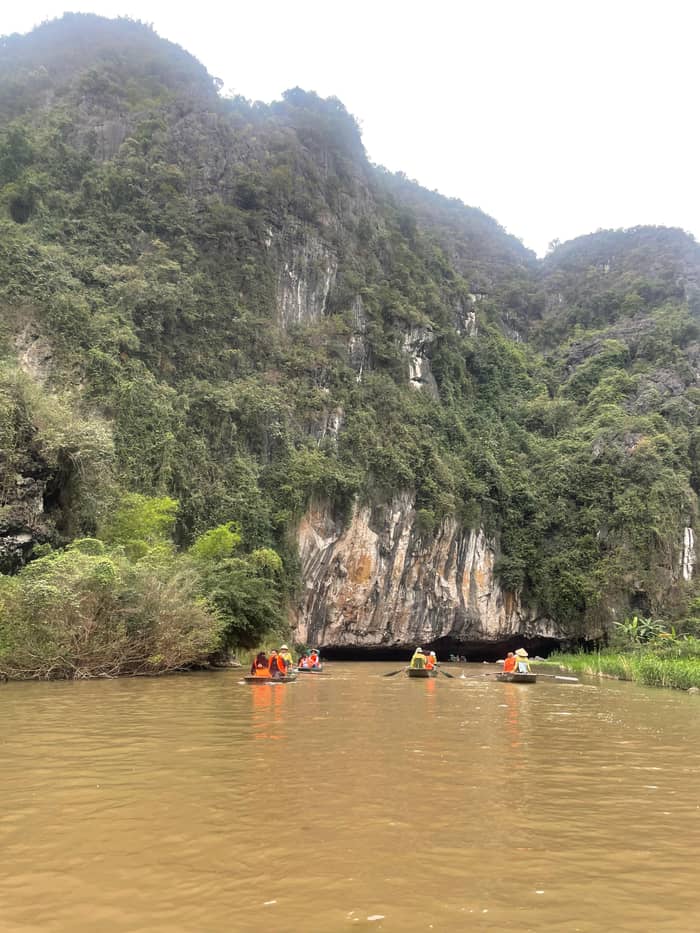
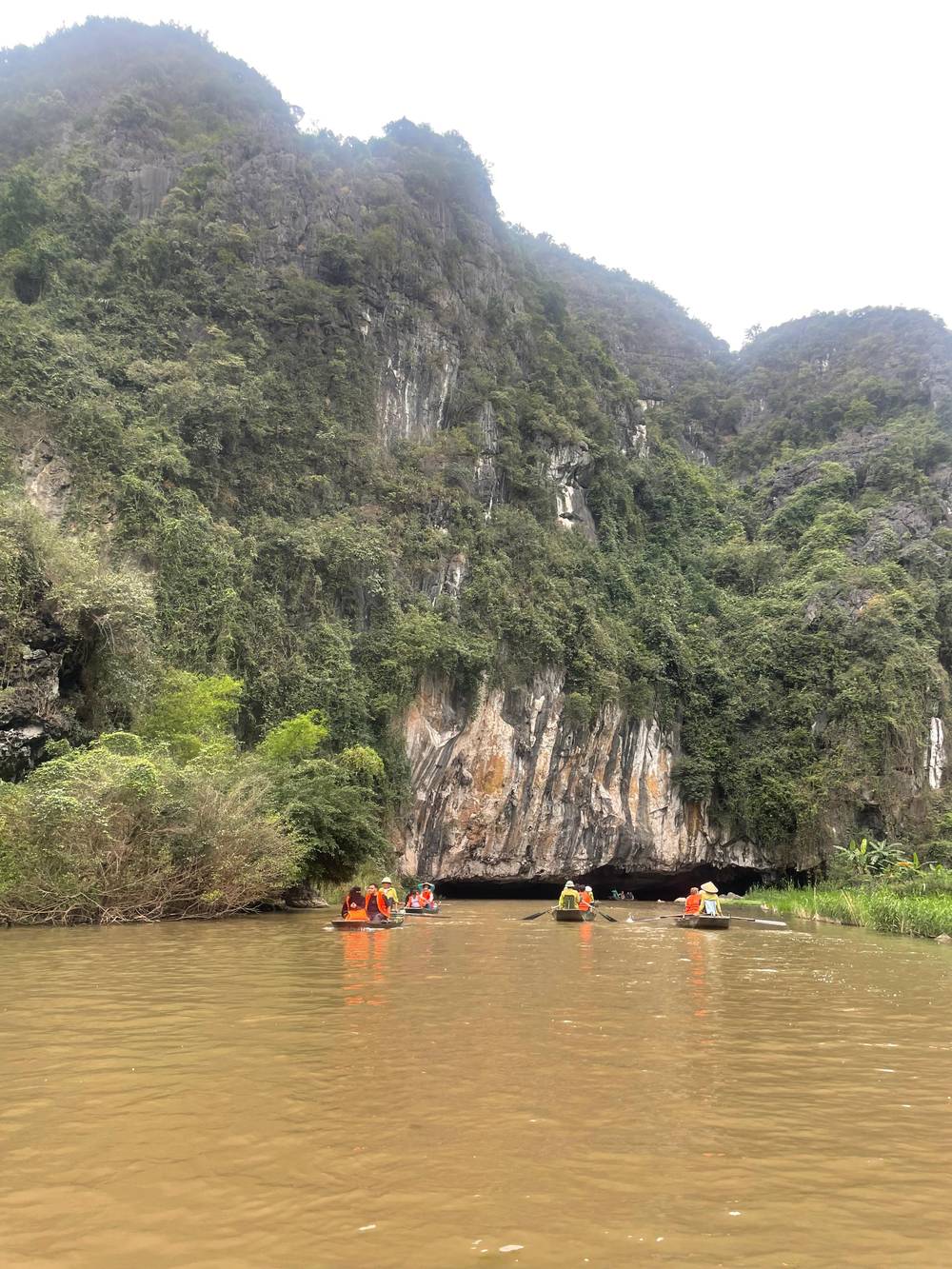
The national radio describes the summer boat ride with lotus fragrance on the water while locals tell legends about cliffs shaped like a tortoise or a dragon head.8 The national authority writes that Ninh Binh mornings come wrapped in mist, and that evenings turn to a soft gold glow above the paddies.19 Mist can hide the hills for a while and then lift, so mornings and evenings are the soft hours on the river.
Silver is the look the pages describe least. The provincial center writes of the silver color of the water in the field.4 That is a look of its own, and the page leaves its dates open. A visitor who arrives in a different season from the golden weeks can still find a river worth the ride. Green belongs to spring, as the national radio says.8 None of the official pages promise a particular week for the silver and the green, so treat those looks as seasons, not dates.
Price your party
Type how many travelers there are and the page totals each tour that crosses the paddies.
A year on the river
Spring
Bright green rice spreads along the river banks.8
Mid-May
The provincial center dates the ripe rice season from mid-May.9
Late May
The authority says rice terraces ripen into amber from late May.10
Early June
May and June are the busiest harvesting months.3
Summer
The river rises in the monsoon and the lotus fragrance is on the water.1,8
Late October
The Ninh Binh newspaper reported the river covered in lotus purple.11
Tam Coc weather follows the climate of the province, and Ninh Binh has a tropical monsoon climate with 4 full seasons in the national tourism authority's description, and it names them as winter, the dry season, summer, the rainy season, spring and autumn.28 Its place page adds that summers are hot and humid and winters cool and drizzly.6 The provincial tourism department gives a yearly mean of 23.1 degrees Celsius for the province.16 A yearly mean hides the swing between cool winters and hot summers, which the Hanoi notes later on this page show better.
Rain is the main variable. The same department counts 125 to 157 rainy days in an average year, with most of the rain falling in the summer months between May and November.7 That overlaps the golden weeks at their start, so an afternoon shower in late May is possible, and a flexible plan helps. A rain jacket in the bag costs little, and nothing covers the boat to shelter you.25 The weeks around the harvest are the ones to book with a free cancellation window.
No station data exist for Tam Coc itself on this site, so seasonal temperatures come from the nearest city the authority describes, Hanoi, which lies roughly 90 to 120 km away depending on the source.29,30 For Hanoi the authority describes cool, misty, cloudy weather from December to March, warm to hot spells from April to June, a hot, humid and rainy stretch from June to August and cool, clear days from September to November.18
Video
Vietnam News Agency (VNA) on YouTube · The video waits until you tap play to load.
The most enchanting season arrives between late May and early June, when the rice terraces surrounding Tam Coc ripen into luminous shades of amber and honey.
Before you go
The authority's Hanoi notes give a few temperatures. Daytime heat starts in April and sometimes passes 30 degrees, while the stretch from September to November cools to around 25 degrees under sunny skies.17 Late May falls within the warm to hot stretch, so carry water for the boat, wear light clothes that you can layer, and remember that the boat has no roof.25 The provincial center also suggests tidy clothes for the boat.25
The cold months need layers. For late December to March the authority warns of surprisingly cold nights in Hanoi, with lows of 10 degrees.15 A boat on the river in a damp winter morning is cooler than the same ride in May, and the caves hold cool air even on a warm day, as the news agency notes.31 The same weather page gives April to June, then September to December, as the usual good months for Hanoi.32
The same cool air can bring mist in the early hours. At the Mua Cave viewpoint the authority notes that mist sometimes hides the scene, and that once it lifts you look down on a patchwork of green paddies and winding rivers.20 The viewpoint is the vantage point the authority names for the best sweep over Tam Coc and the river.33 If you climb for the colors, allow time to wait for the mist to lift, and remember that the climb itself is a long one, with hundreds of steps cut into the mountain.
Put the pieces together. The national tourism authority says April to June suits Ninh Binh best, with the paddies near Tam Coc gold by late May, while autumn brings cool, clear days as well.12 The Ninh Binh newspaper says October to March is considered the golden season for welcoming international visitors, which is a tourism calendar and not a harvest one.34 Both can be true for different reasons: gold fields in May, cooler air in autumn.
Your tour choice then follows the season you picked, and the price follows the tour. A Tam Coc rice fields boat tour on the day tour here or by sampan alone is the plain way to see the paddies from the water. The tour booked on this site, from $46, has an optional bike ride, Tam Coc by sampan and a climb to Mua Cave, so it covers both the river and the viewpoint. The cycling day from $20 adds a 2 hour boat cruise and a short bike tour of 30 minutes. An e-bike tour from $16 rides the village lanes for 4 hours.
One listing is plain about the season: a 12-hour day trip lists Tam Coc with cycling and says whether there is a rice field in Tam Coc depends on the local season, from $36. That is good advice for any tour, since the paddies are a living crop. Book a date, look at the outlook as the day nears, and keep in mind that sources vary by a week or more on when the gold arrives.
FAQ
The news agency says the river rises in the monsoon, so farming on its banks is impossible and there is 1 crop per year.1
The news agency names May and June as the peak of the rice harvest at Tam Coc.3
The Ninh Binh tourism department gives 125 to 157 rain days a year, mainly from May to November.7
The national authority says the Mua viewpoint is sometimes covered in mist but clears.20
The authority says Hanoi days from April are normally hot, occasionally above 30 degrees.17
Sources
Continue reading
Wondering how the Tam Coc boat day works? A real person can tell you.